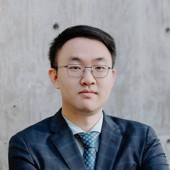
Qipei (Gavin) Mei, PhD, PEng
Faculty of Engineering - Civil and Environmental Engineering Dept
Pronouns: he, him, his
Contact
Assistant Professor, Structural/Construction/Cross-Disciplinary
Faculty of Engineering - Civil and Environmental Engineering Dept
- qipei@ualberta.ca
- Address
-
6-263 Donadeo Innovation Centre For Engineering
9211 116 StEdmonton ABT6G 2H5
Overview
Area of Study / Keywords
Professor AI-Assisted Design Construction Automation Smart Infrastructure Cross-Disciplinary Civil Engineering Structural Engineering Construction Engineering and Management
About
(Updated May 15, 2026) I am actively hiring graduate (MSc and PhD) students for 2026.09 and 2027.01. Three Research/Teaching Assistant positions are available for excellent students. Students who have secured funding, or are prepared to apply for external scholarships (such as CSC scholarships or NSERC CGS), are strongly encouraged to apply. Please ensure to highlight this information in your application email, as it aids in the decision-making process. Please refer to this webpage to apply.
Professional Experience
- 2021.01 - Present, Assistant Professor, University of Alberta, Edmonton, Canada
- 2014.11 - 2016.06, Structural Engineer, SPS Technology, Ottawa, Canada
Education
- 2020, Ph.D., Structural Engineering, University of Alberta, Edmonton, Canada
- 2018, M.Sc., Computer Science, Georgia Institute of Technology, Atlanta, United States
- 2014, M.Sc., Structural Engineering, University of Alberta, Edmonton, Canada
- 2011, B.E., Civil Engineering, Huazhong Univeristy of Science and Technology, Wuhan, China
Research Websites
Research
Research Interests
In general, my research aims at increasing the sustainability and efficiency of the design, construction, and maintenance of infrastructure and buildings. It consists of three major components:
- Application of data-driven methods for design automation.
- Application of sensing and robotics to improve the safety and productivity of construction operations.
- Infrastructure and building condition assessment using digital twin