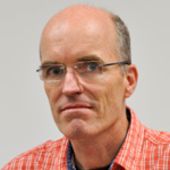
Thomas Stachel
Faculty of Science - Earth & Atmospheric Sciences Admin
Contact
Professor
Faculty of Science - Earth & Atmospheric Sciences Admin
- tstachel@ualberta.ca
- Phone
- (780) 492-0865
- Address
-
1-14 Earth Sciences Building
11223 Saskatchewan Drive NWEdmonton ABT6G 2E3
Overview
Research
Research area
Diamond Geology
Research interest
Thomas Stachel’s main research area is diamond geology. By studying the chemical and physical properties of diamonds (stable isotope composition, nitrogen contents and aggregation levels) and the geochemistry of their mineral inclusions, he seeks to define the conditions under which diamonds are formed and stored within the Earth’s mantle. Because diamonds form over a large depth interval extending from the deep lithosphere (>140 km depth) into the lower mantle (beneath the 660 km discontinuity), they provide a unique means of obtaining direct information on this otherwise inaccessible region of our planet
Research opportunity
PhD and MSc projects are currently available in the following fields
- Systematic studies on diamonds and their mineral inclusions from mines in Canada and worldwide
- The evolution of cratonic roots (the origin of cratonic peridotites, eclogites, and pyroxenites).
- The mineralogy and geochemistry of the deep mantle (asthenosphere, transition zone and lower mantle)
Courses
EAS 100 - Planet Earth
Introduction to the origin and evolution of the Earth and the solar system. Introduction to plate tectonics and the rock cycle. Simple energy balances and interactions between radiation and the atmosphere, land, oceans, ice masses, and the global hydrological cycle. Evolution of life, biogeography, and global climate in the context of geologic time. The carbon cycle. Human interaction with the Earth. Mineral and energy resources. This course may not be taken for credit if credit has been obtained in EAS 200 or 201.
EAS 201 - Earth Science I
A non-laboratory introduction to the origin and evolution of the Earth and the solar system. Introduction to plate tectonics and the rock cycle. Simple energy balances and interactions between radiation and the atmosphere, land, oceans, ice masses, and the global hydrological cycle. Evolution of life, biogeography, and global climate in the context of geologic time. The carbon cycle. Human interactions with the Earth. Mineral and energy resources. This course may not be taken for credit if credit has been obtained in EAS 100 or 210. (Note: EAS 201 and EAS 200 are considered to be equivalent to EAS 100 for prerequisite purposes). [Faculty of Science]
EAS 232 - Mineralogy II
Optical techniques in determinative mineralogy with particular emphasis on transmitted-light microscopy and its application to common rock-forming minerals. Mineral associations, textures and elementary ideas on the origin of igneous, metamorphic and sedimentary rocks. Prerequisite: EAS 224. [Faculty of Science]
Featured Publications
Hogberg K., Stachel T., Stern R.A.
Lithos. 2016 January; 265
Stachel T., Luth R.W.
Lithos. 2015 January; 220-223
Ickert R.B., Stachel T., Stern R.A., Harris J.W.
Geochemical Perspectives Letters. 2015 January; 1