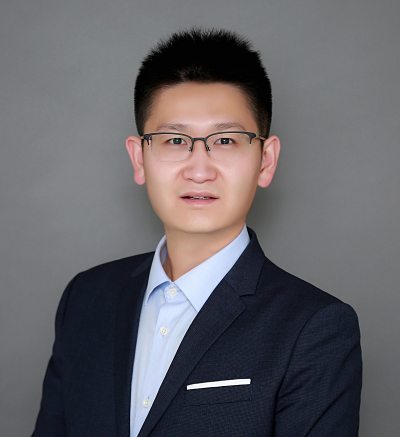
Xingqi Zhang, PhD
Faculty of Engineering - Electrical & Computer Engineering Dept
Contact
Associate Professor
Faculty of Engineering - Electrical & Computer Engineering Dept
- xingqi.zhang@ualberta.ca
- Phone
- (780) 492-1448
- Address
-
11-381 Donadeo Innovation Centre For Engineering
9211 116 StEdmonton ABT6G 2H5
Overview
Area of Study / Keywords
Applied Electromagnetics Electromagnetics and Microwaves Communications Engineering Radio Wave Propagation Antennas & RF/Microwave Design 5G/6G/THz Integrated Circuits and Systems IoT Biomedical Engineering Software Engineering and Intelligent Systems Machine Learning AI
About
Dr. Xingqi Zhang received the B.Sc. degree (graduated with honors) from the Harbin Institute of Technology, China, and the M.A.Sc. and Ph.D. degrees from the University of Toronto, Canada. He is currently an Associate Professor in the Department of Electrical and Computer Engineering, University of Alberta, Canada. He is also affiliated with the School of Electrical & Electronic Engineering, University College Dublin, Ireland, as an Adjunct Professor. Besides, he has been a Visiting Professor at the University of Toronto and the Queen Mary University of London, and an Associate Investigator at the Science Foundation Ireland Research Centre for Future Networks and Communications (CONNECT) in Ireland.
His research is in the interdisciplinary areas of applied electromagnetics and wireless communications. A particular focus is on the development of high-performance computational models and algorithms for emerging wireless technologies in 5G/6G/THz wireless communications, intelligent transportation (air, ground, underground), underwater communications, industrial Internet of Things, as well as biomedical sensing and healthcare applications.
He has been involved in a variety of research council and industry-funded projects, and has been collaborating with many world-leading universities and international companies. For example, he is currently the coordinator and lead principal investigator (PI) for a million-level European-funded project under the Horizon 2020 Future & Emerging Technologies program. The projects in his group cover the following topics: wireless channel modeling and optimization in indoor, urban, and terrestrial environments, multiphysics and multiscale modeling for electromagnetic, micro-/nano-electronic, and biomedical problems, indoor/outdoor localization, integrated sensing and communication, machine learning and parametric modeling, stochastic uncertainty quantification, EMC/EMI analysis, reconfigurable intelligent surface (RIS), as well as antenna and RF/microwave/millimeter-wave design & measurement.
He has served as a Distinguished Lecturer (2026-2028) of the IEEE Vehicular Technology Society (VTS), and an Associate Editor for the IEEE Antennas and Wireless Propagation Letters (AWPL), the IET Microwaves, Antennas & Propagation (MAP), and the IEEE Journal on Multiscale and Multiphysics Computational Techniques (JMMCT). In addition, he has been a Technical Program Committee Member and Session Chair for several flagship international conferences (e.g., IEEE AP-S/URSI, IEEE IWS, IEEE NEMO, IEEE VTC).
His contributions have been recognized through numerous honors and awards, including the IEEE Sensors Council Technical Achievement Award in Sensor Systems or Networks, the Petro-Canada Emerging Innovator Award, the Applied Computational Electromagnetics Society (ACES) Early Career Award, the Royal Irish Academy (RIA) Charlemont Award, the Irish Research Council (IRC) Research Ally Prize, and the IEEE ICCT Outstanding Young Scholar Award. He has also received five Young Scientist Awards from the International Union of Radio Science (URSI), ACES, and the Electromagnetics Academy, as well as several Best Paper Awards at international conferences and symposia.
Links:
Research
Research Interests:
- Physics-based wireless channel modeling and optimization of sensor networks in cyber-physical systems.
- Radio wave propagation (indoor, urban, terrestrial, aerial, underground, body-centric), integrated sensing and communications, localization, digital-twin-enabled wireless intelligence.
- Machine learning and parametric modeling, physics-informed neural networks, AI agents for wireless and electromagnetic systems, stochastic uncertainty quantification.
- Multiphysics/multiscale modeling for electromagnetic, micro-/nano-electronic, and biomedical applications.
- Reconfigurable intelligent surface (RIS), antenna & RF/microwave/millimeter-wave design, EMC/EMI.
Announcements
Openings:
Dr. Xingqi Zhang is currently looking for highly motivated Undergraduate/Master/PhD students, Postdocs, and Visiting Researchers to join his group. For interested candidates, please feel free to drop him an email along with your CV, academic transcripts, English qualifications, and any other documents that you believe can well demonstrate your research capability and potential.
Courses
ECE 209 - Fundamentals of Electrical Engineering
Physical concepts of passive circuit elements, Kirchhoff's laws and DC circuit equations. Energy concepts, time domain analysis of AC circuits. Impedance, complex numbers and phasor algebra. AC power concepts, resonance, three phase circuits, introduction to machines. Credit may be obtained in only one of ECE 209, E E 239, ECE 202, or E E 240, unless approved by the Department.
ECE 579 - Radio Wave Propagation: Theory, Modeling, and Applications
This course will cover theoretical foundations, numerical models, practical applications, and emerging research topics related to radio wave propagation, enabling students to understand and analyze complex propagation scenarios encountered in wireless communication systems.
ECE 770 - Advanced Topics in Photonics and Plasmas